

 Go Back
Smarter and Sustainable Pharma Manufacturing with ACG Engineering
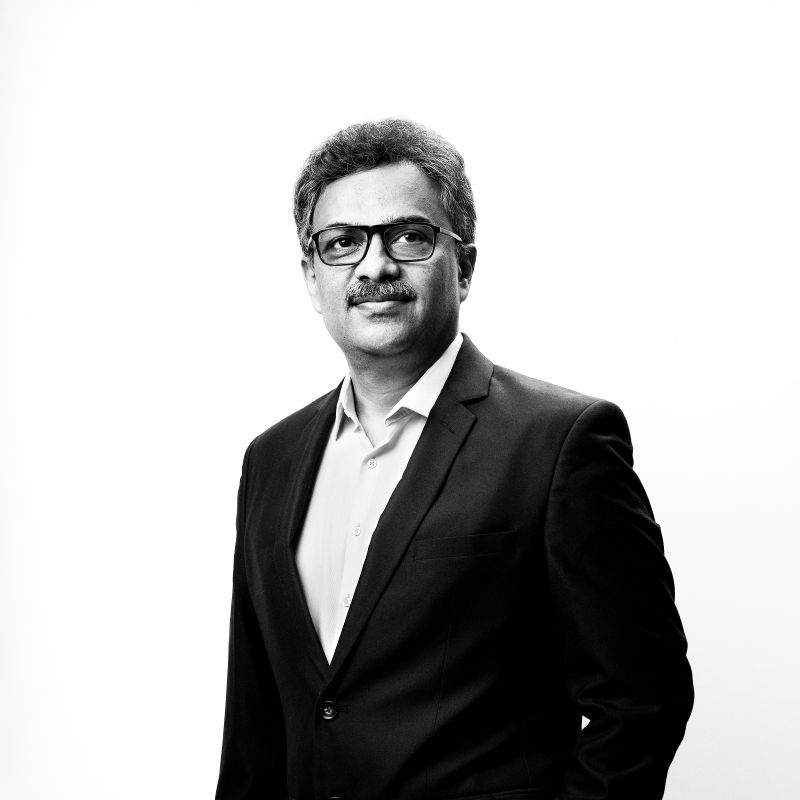
In an exclusive interaction with Pharma Industrial India, Rajesh Menon, CTO, ACG Engineering, discusses the company’s role in advancing India’s pharmaceutical machinery sector and the broader transition of Indian pharma toward high-quality, compliant, automated, and sustainable manufacturing.
Q. To begin with, could you give us a brief overview of ACG and its core areas of operation?
Rajesh Menon: For 65 years, ACG has been innovating production solutions for pharmaceutical and nutraceutical companies that help make people better. As the world’s most integrated provider of oral-dosage products and services, we produce capsules, barrier packaging materials, manufacturing machinery and visual inspection and traceability solutions, all fully compliant with international standards. Today, ACG partners with customers in 138 countries across six continents. Together, we share a common purpose: to solve the world’s greatest health challenges and make it better for everyone we serve.
Q. Given ACG’s global footprint, how does the regulatory compliance landscape in India differ from that of other markets? Is it easier or more challenging?
Rajesh Menon: I wouldn’t say it’s easier in India — definitely not because global regulators like the FDA keep a strict watch over Indian companies. However, we work closely with our customers to ensure they meet all the necessary compliance requirements for the machines and technologies that we provide.
For example, we have now introduced connected machines that enable customers to identify hidden inefficiencies in the system - issues that often go unnoticed in complex production lines. We can help customers with continuous data monitoring during manufacturing, allowing them to identify bottlenecks, reduce process variations, and achieve more consistent product quality throughout the machine’s lifecycle. They can also take proactive corrective actions before it affects the performance or the quality of the product.
In several instances, where we have worked closely with customers, we’ve seen up to an 11 percent increase in OEE, a 54 percent reduction in process variations, and, in some cases, as much as a 20 percent boost in machine speed. Additionally, the system supports predictive maintenance and ensures regulatory compliance. It’s highly user-friendly — if a problem arises, it identifies the issue, suggests solutions, and even provides alarms well in advance by predicting what can go wrong based on available data. So, this is a highly valuable solution for the industry, helping customers improve productivity, lower manufacturing costs and maintain full compliance.
Q. In terms of machinery quality, Germany leads the way, while China is known for its price competitiveness. Where does India stand in pharmaceutical machinery manufacturing, and what are the areas where we still need improvement?
Rajesh Menon: Germany undoubtedly leads in engineering excellence, and we’re proud that our machines are designed in Germany and manufactured in India. This combination allows us to deliver world-class quality at competitive prices. However, we haven’t yet reached the scale of mass manufacturing that China has achieved. That’s where the main difference lies - Chinese machines are still cheaper due to their high-volume production. But when it comes to quality and the level of support we provide, I think we are definitely better.
ACG doesn’t just supply machines — we provide comprehensive process technology support to our customers. We have a team of more than 15 pharmacists with extensive experience, having worked on thousands of formulations across different parts of the world. Once a machine is commissioned, these pharmacists visit customer sites to help optimise their formulations and production processes, ensuring the best possible results in the shortest time.
In addition, we have a fully equipped laboratory in Shirwal, where customers with various challenges — for example, issues with dissolution, tablet hardness or disintegration, consult us and our team collaborates with them to develop effective solutions. Customers can bring their formulations to our lab, where we conduct trials, optimise processes and share the improved results with them. This level of support is not offered by others in the industry, and it’s what truly differentiates us from the competition.
Q. What trends are shaping the pharmaceutical machinery sector today?
Rajesh Menon: Some trends are digitalisation, AI and Machine Learning, modular and adaptive equipment for flexibility and cost optimisation in manufacturing. With growing global competition and increasing price pressures, every customer is nowfocused on producing at the lowest possible cost. To achieve this, they need to look at machine efficiencies, manpower costs, automation potential and equipment reliability. This is where we come in. We work closely with our customers to deliver such solutions, and as mentioned earlier, our connected machines make it much easier for them to cater to the different market requirements.
Q. In which areas of pharma manufacturing is automation most critical?
Rajesh Menon: At all levels. The pharmaceutical industry is focused on ensuring high-quality products to avoid product recalls due to human error or any quality issues coming out at a later date. The more automation we can provide in such areas during the manufacturing process, the more reliable and consistent the output becomes. Automation ensures that every process is digitally recorded, auditable, reliable and compliant with global standards.
Q. Automation also comes with a price. For manufacturers looking to partially automate, which areas would you recommend they prioritise?
Rajesh Menon: Around 10–15 years ago, customers preferred the simplest Programmable Logic Controllers (PLCs) and control systems — simple setups with a few push buttons were perfectly acceptable. However, the trend has now changed. Customers are increasingly seeking the latest automated high-end PLCs with recipe control, enabling batches to run independently with minimal human intervention. This shift has driven a growing demand for equipment upgrades. Many of our machines that are 20–25 years old are still working fine, but customers often come to us for upgrades, mostly related to the control systems, and that’s what we provide.
Q. How is ACG Engineering advancing its own digital transformation?
Rajesh Menon: We continuously evolve when it comes to our manufacturing facilities, constantly upgrading and investing significantly in them. At our Shirwal plants, for example, we have automated robots producing precise parts, lights-out operations in our CNC section, and various automated systems integrated across operations.
We have a whole range of the latest CNC machines to get us the best components manufactured to the most critical tolerances - a necessity for producing high-speed machines. We are also setting up a modern factory in Shirwal, where we are looking to incorporate the latest manufacturing techniques, processes and automate the warehouses, build flexible assembly lines, etc.
There’s a lot of work going on with respect to automation. On the people side, we continuously train and upskill our teams. We have our own digital transformation, automation and control teams, and every new employee undergoes a structured training process through our online training protocols. At the same time, we ensure a healthy work-life balance for our teams because they are really critical to us in the journey going forward.
Q. With sustainability becoming a key focus in the pharma industry, what steps is ACG Engineering taking to go green?
Rajesh Menon: At ACG Engineering, sustainability is becoming a core value proposition. Life-cycle assessments of equipment and CO2 footprint reduction are central to our approach, and we are following a comprehensive and structured roadmap to achieve carbon neutrality by 2040. This commitment is not only about reducing impact, but also about aligning with the expectations of our customers and the wider global community.
In the meantime, we maintain a strong focus on safety and sustainability within our plants, and these efforts continue to evolve. As we progress, these initiatives will further expand to meet defined sustainability milestones and support the industry’s transition to greener operations.
Q. India is often referred to as the “pharmacy of the world” and now aspires to evolve into a global hub for pharmaceutical innovation. Do you believe the country currently has the necessary infrastructure and skilled workforce to support this transition?
Rajesh Menon: I believe the entire pharma industry is well equipped for this transition. If you look at the scale of investments, ongoing expansions and the modern plants being established, it’s clear that companies are ready to invest and now demand the best equipment — a notable shift from earlier trends. India is moving beyond its traditional role as a low-cost manufacturer to become a strategic centre for research and development. The country benefits from a strong scientific talent pool, advanced research and development (R&D) capabilities, supportive government policies, and a robust manufacturing and regulatory framework.
At ACG, we have an R&D centre in Mumbai and another in Germany, where we have the best of talent working on developing new models and machines to meet the changing customer requirements. We also maintain a continuous exchange of knowledge — sending our people to Germany to get trained under experts, and bringing those experts to India to train our local teams. This ensures we stay up to date with the latest technologies and innovations.
Q. Finally, where do you see India’s pharma machinery sector in the next 5–10 years, and what role will ACG play in that journey?
Rajesh Menon: I see this sector among the top five in the world, expected to experience sustained and significant growth, driven by increasing demand in both domestic and International markets. ACG will definitely play a major role in this growth, as we continue to focus on the latest technologies, bringing the best innovations to the market. The new products we plan to launch in the coming years represent some of the most advanced technologies — including innovations that are not yet available anywhere in the world.
We look forward to welcoming customers at PMEC India 2025 to experience these innovations first hand, interact with our experts, and explore how we can partner in solving their manufacturing challenges.