


 Go Back
Tackling regulatory challenges through collaboration
Shincy Jacob, sr. manager global product management, Samata Karwakar, GM quality & regulatory affairs, Patricia Shetty, VP quality & regulatory affairs, Dr.Subhashis Chakraborty, head global product management at ACG World discuss tackling regulatory challenges through collaboration.
Stories that link cancer risks to pharmaceutical and nutraceutical ingredients like titanium dioxide (TiO2), Red Dye No. 3 and nitrosamines hit news sites on what seem like a regular basis, but the reality is never as simple as the headlines may suggest. Regulatory bodies like the US Food & Drug Administration (FDA), European Medicines Agency (EMA), and the European Commission (EC) are right to be cautious when any adverse health effects are linked to excipients found in medicines and healthcare products. However, imposing blanket bans without a full picture of the impact and viability of such restrictions can interrupt vital research and lead to shortages of medicines as well as cause reputational damage and wasted time and budget.
Tackling the complex challenges of identifying and interpreting impurities, contaminants, and anomalies that arise during pharmaceutical testing requires a more measured and holistic approach. Regulatory bodies need to communicate, share data, and collaborate with formulators, excipient and component suppliers and pharmaceutical manufacturers throughout the process to ensure patient safety and efficacy. This transparency will help avert any unnecessary panic and avoid unintended consequences that can arise from isolated actions.
Beyond the headlines
Following the EC’s ban of TiO2 as a food additive in 2022, the pharmaceutical industry began evaluating the safety of the whitening agent in medicinal products. Companies like ACG invested in our own research into the feasibility of using TiO2-free alternatives. After careful evaluation, we identified the complexities and technical limitations of eliminating the agent, communicating to our customers and the industry that an exact replacement with the same properties would not be possible with current material science.
By sharing findings with industry organisations like the IQ Consortium, we have been able to help suppliers across the pharmaceutical supply chain to make informed and strategic decisions about their use of the additive. This evidence-based approach allowed them to avoid operating in the dark and respond blindly to the regulatory changes.
Understanding Nitrosamine risks
In pharmaceuticals, safety concerns don’t always come from a single ingredient — sometimes they arise when materials interact. Nitrosamines are a good example. Nitrosamines are chemical compounds that can form when substances containing amines react with nitrites under conditions such as heat, moisture or acidity. Because several nitrosamines are classified as probable human carcinogens, even trace levels in medicines are a major safety concern.
Nitrosamines were first detected as N-nitrosodimethylamine (NDMA) in Valsartan (2018), followed by N-nitrosodiethylamine (NDEA) and N-nitrosomethyl-4-aminobutyric acid (NMBA) in other sartans like Losartan and Irbesartan (2019), and later in Ranitidine (2020), extending the issue beyond blood-pressure drugs and prompting global recalls.
In response to emerging risks, regulatory authorities have established stringent limits on allowable nitrosamine levels in drug products. While the initial focus was largely on active pharmaceutical ingredients (APIs), increasing awareness has expanded attention to excipients as potential contributors.
A shared responsibility
Despite being typically regarded as low-risk contributors to nitrosamine formation, under certain conditions, excipients can still play a role. For example, excipients that contain amines or nitrites may pose a higher risk when combined with specific formulation matrices and storage environments.
Excipient suppliers take these risks seriously and are playing a pivotal role in industry-wide risk mitigation by implementing nitrite controls and periodic nitrite testing, collaborating with drug manufacturers to help minimise nitrosamine concentration in end products.
Assessing the risk
For excipient manufacturers, managing nitrosamine risk begins with a thorough understanding of the raw materials used to make their products. It is critical to determine whether any incoming materials contain amine groups, as these can act as precursors for nitrosamine formation once the excipient is combined with an API. Tools such as the IPEC questionnaire have been valuable in early assessments of these excipients.
Excipient manufacturers must also consider how their products might influence Nitrosamine Drug Substance Related Impurities (NDSRIs), which are nitrosamines structurally related to the API or its fragments. Even though NDSRIs are specific to the API, interactions with excipients—especially under certain manufacturing or storage conditions—can affect their formation.
Although nitrosamines constitute a recognised safety concern, their relevance is not universal across all pharmaceutical products, due to well-established scientific and mechanistic considerations. It is therefore critical that scientists engage with excipient suppliers in a deliberate and evidence-driven manner, avoiding undue pressures that could inadvertently increase project complexity, delay product development timelines, and elevate overall costs.
A closer look at capsules
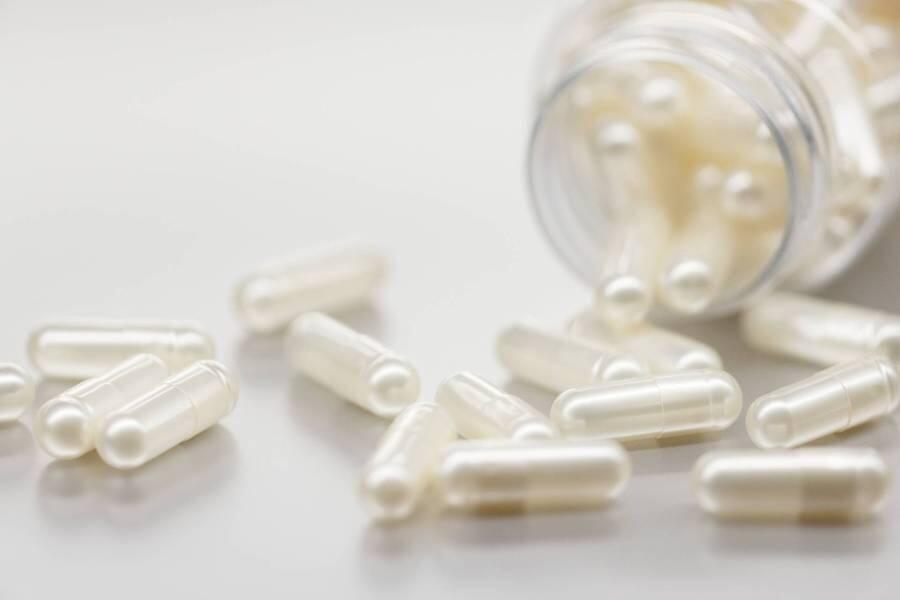
Empty hard capsules (EHCs) are an example of critical excipients used widely in solid oral drug products, serving as protective shells for carrying the active pharmaceutical ingredients (APIs). Due to their direct contact with drug formulations, strict control over their raw materials and manufacturing processes is essential to minimise any potential nitrosamine-related risks. Gelatine and Hydroxypropyl Methylcellulose (HPMC) capsules each present unique considerations due to their distinct compositions and properties.
Derived from collagen, gelatine is a natural protein composed of amino acids. Because of its biological origin, gelatine can inherently contain trace amounts of nitrites, which may arise from raw material sources or processing conditions. Elevated nitrite levels in gelatine raise concerns about nitrosamine formation and therefore require stringent sourcing protocols, rigorous nitrite monitoring, and tightly controlled manufacturing processes.
HPMC capsules, made from a cellulose derivative, generally pose a lower risk of nitrosamine formation due to their chemically inert chemical structure. HPMC itself is free from amino groups that could react with nitrosating agents, reducing the likelihood of nitrosamine formation. For example, ACG’s “H Plus” capsules—which contain only HPMC and water, without additional gelling agents—offer an even lower risk profile, especially in clear, transparent formulations where minimal additives are used.
Safety through monitoring, mitigation, and collaboration
For both gelatine and HPMC capsules, continuous monitoring of raw material quality, combined with targeted mitigation strategies, is vital to uphold product safety and meet evolving regulatory requirements. Collaboration between raw material suppliers, capsule manufacturers, pharmaceutical companies, and regulatory authorities helps to drive innovation in quality control and analytical testing, ensuring that capsule excipients remain reliable components in modern drug delivery systems.
A structured approach with proactive supplier engagement is essential to strengthen safeguards and to help ensure the safety of capsule-based drug products from unnecessary risks. This should encompass: raw material quality control, manufacturing process optimisation, constant analytical monitoring, robust packaging, appropriate storage controls, detailed risk assessment, meticulous documentation and ongoing collaboration.
Early and continuous collaboration across the entire supply chain helps identify high-risk APIs, manage nitrite levels and maintain effective controls throughout the product lifecycle –ensuring the integrity of medicines, healthcare products and the wider pharmaceutical supply chain, while confidently addressing emerging concerns.