

 Go Back
OSD Manufacturing Enters a New Era: Key Trends Shaping the Global Market
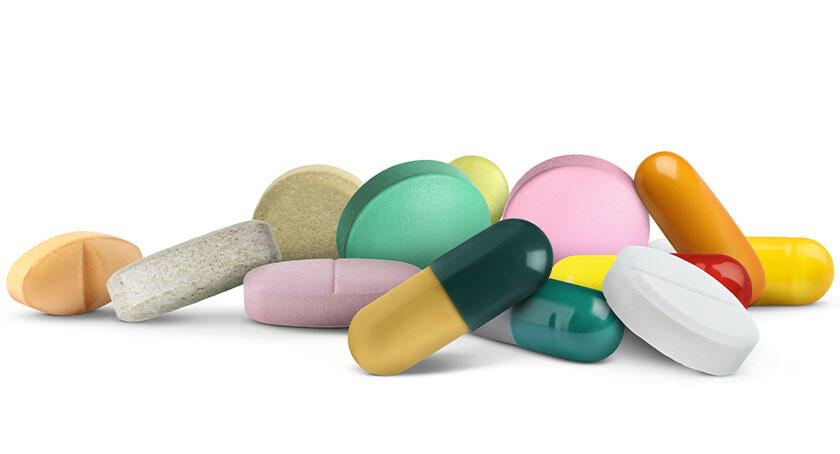
Oral solid dose (OSD) medicines remain the backbone of pharmaceutical therapy, accounting for the majority of prescriptions worldwide thanks to their stability, convenience, and cost‑effectiveness.
According to a recent report by Grand View Research, the global oral solid dosage contract manufacturing market size was estimated at $38,638.6 million in 2024 and is projected to reach $54,718.2 million by 2030, growing at a CAGR of 6% from 2025 to 2030.¹
Yet behind this familiar format lies a rapidly evolving landscape. Advances in formulation science, manufacturing technologies, and patient‑centric design are redefining what is possible in tablets and capsules, enabling more complex molecules, improved therapeutic outcomes, and increasingly flexible production models. At the same time, rising expectations around sustainability, regulatory compliance, and global supply resilience are pushing the industry to innovate faster than ever.
As pharmaceutical companies strive to bridge scientific breakthroughs with practical delivery, OSD development has become a focal point for modernization. This article explores current OSD development and manufacturing trends from a CDMO perspective, including the evolution of outsourcing, emerging technologies, manufacturing advancements and industry challenges.
Current State of the Global OSD Market
“Today’s OSD landscape is incredibly robust,” says Ian Lafferty, Chief Technical Officer, Upperton Pharma Solutions. “Oral solids continue to anchor the global drug market because they deliver an unmatched mix of dose control, stability, manufacturability, and patient acceptance. With the global OSD sector growing steadily it’s clear that this dosage form will remain the backbone of pharma for years to come.”
“OSD remains the gold standard,” adds Daniel Shi, Head of New Product Development, Douglas CDMO. “While biologics get the headlines, small molecules in OSD formats are still the backbone of healthcare due to cost-efficiency and patient ease.”
However, Shi also identifies changes occurring in the market. He says, “The market is shifting toward complex OSD forms, such as high-potency compounds, poorly soluble molecules requiring specialized lipid-based delivery, like softgels, and multi-active combinations.”
According to Rafael Costa, Vice President, Sales, ACG Capsules, “alternative oral formats such as gummies, chewables, and orally disintegrating forms are gaining traction, driven by consumer demand for convenience, improved taste and enhanced compliance.”
He says, “Innovation continues to focus on advanced delivery technologies and increasingly complex molecules. As a result, there is a growing demand for CDMOs with specialized technical capabilities, regulatory expertise and scalable manufacturing platforms.”
“The global OSD market is large, mature, and still growing, but shifting towards higher-value OSD products,” adds Uwe Hanenberg, Head of Product Development, Oral Solid Dose, Recipharm. “They are more complex to develop and manufacture, requiring advanced formulation technologies, specialized manufacturing capabilities, and differentiated delivery profiles.”
Sam Ricchezza, Sr. Managing Advisor, Commercial Operations, Pharma Tech Industries, believes the global OSD market is entering “a new phase of evolution.” He explains, “While the dosage form itself is well established, the systems that support development, manufacturing, and commercialization are under pressure to become faster, more resilient, and more flexible. Innovation today is less about reinventing the dosage form and more about reengineering the operating models that deliver it efficiently at global scale.”
Evolution of OSD Outsourcing and Strategic Partnerships
“Over the past few years, demand for OSD outsourcing has continued to evolve significantly, particularly in how pharmaceutical companies view and engage with CMOs,” observes Yves Massicotte, CEO, Ropack. “Historically, outsourcing was often driven by capacity needs or short-term operational gaps.
“Today, outsourcing has become far more strategic. As manufacturing technologies, process controls, and quality systems continue to advance, pharmaceutical companies increasingly rely on CMOs not only for execution, but for technical expertise, reliability, and operational flexibility.
“This shift has elevated CMOs to trusted partners, more frequently involved earlier in development and commercialization decisions.”
Upperton’s Ian Lafferty also sees “a clear acceleration in outsourcing over the past few years.”
“As molecules become more complex and internal capacity gets stretched, pharma companies increasingly turn to CDMOs for formulation expertise and manufacturing reliability,” he posits. “What’s changed is the level of strategic reliance, outsourcing isn’t just about capacity anymore, it’s about accessing specialized know how that keeps development timelines on track.”
Srinivasan Shanmugam, PhD, Executive Director of Pharmaceutical Sciences, Adare Pharma Solutions, makes a similar observation. “Outsourcing has shifted from a capacity tactic to a strategic necessity, driven by pipeline expansion, the rise of small and virtual pharma companies lacking in-house infrastructure, and growing formulation complexity,” he notes. “CDMOs offering integrated, end-to-end solutions for OSD products are in especially high demand.”
Douglas CDMO’s Daniel Shi has also seen an increase in small/virtual biotech companies that have no “bricks and mortar.” He says, “They need an end-to-end partner who can take a molecule from early-stage formulation through to commercial scale.”
“Outsourcing in OSD has increasingly shifted from purely capacity-driven manufacturing toward strategic partnerships and integrated service offerings,” remarks Recipharm’s Uwe Hanenberg. “Sponsors are now seeking CDMOs that can support the full product lifecycle. While capacity outsourcing still remains an important component, the overall trend is toward deeper, more collaborative engagement.”
Uwe adds, “Steady growth in the OSD contract manufacturing market is therefore driven not only by volume demand, but also by the rising complexity of oral formulations and the need for ongoing technology investments. As a result, CDMO demand in OSD increasingly centers on technical expertise, speed and reliability, integrated development-to-commercial supply capabilities, and differentiation beyond price alone.”
Innovation Trends and Emerging Technologies in OSD Development
“Innovation in OSD is increasingly focused on patient experience and operational performance,” says Pharma Tech Industries’ Sam Ricchezza. “This includes growth in alternative formats, unit-dose and single-serve packaging, such as Stick Packs, and delivery solutions that improve adherence. At the same time, manufacturers are adopting automation, digitalization, and data-driven decision-making to improve predictability and throughput.”
ACG’s Rafael Costa observes “strong momentum” behind advanced drug delivery technologies, including sustained-release systems, bioavailability enhancement platforms and targeted-delivery capsules. He says, “These technologies address the growing complexity of active ingredients and patient-centric design requirements.”
Adare Pharma Solutions’ Shanmugam says, “Patient-centric dosage forms such as orally disintegrating tablets, sprinkles, and customized release profiles are a major focus, alongside the push to convert traditionally injectable therapies into oral formats. Digital innovation, including AI-driven formulation design and additive manufacturing technologies like 3D screen printing are also reshaping development.”
“A significant number of drugs are expected to transition from the initial launches in injectable form into new launches as OSDs, which is triggering further demand for both complex OSD formulations and downstream tableting capabilities,” adds José Luís Santos, Senior Director, Strategic Business Management, Particle Engineering, Hovione. He says, “This requires CDMOs to offer deep and specialized expertise in advanced technologies to ensure seamless scale-up and multi- geography supply, going beyond the simple provision of capacity to offer fully integrated services that include capabilities and innovative approaches in technology and engineering”
Ropack’s Yves Massicotte also observes the ongoing effort to transitions certain therapies traditionally delivered via injection into oral solid dose formats. “Recent developments, such as oral versions of previously injectable molecules, highlight the industry’s focus on improving patient convenience, adherence, and accessibility,” Massicotte says.
“Packaging is also evolving, particularly with the introduction of more environmentally responsible materials,” he adds. “Advances in sustainable blister materials are making it increasingly feasible to support commercial production while maintaining stability requirements for specific APIs.”
Manufacturing Advancements and Process Robustness
João Ventura, Senior Director, Strategic Business Management, Drug Product, Hovione, identifies an emerging industry interest in shifting from batch to continuous manufacturing for standard OSD production, which he says is enabled by integrated equipment and advanced control strategies.
“As a result, since 2015, twelve OSDs have been launched to the market using continuous manufacturing technologies,” he says. “In addition, recently, continuous manufacturing technologies of OSDs have also graduated from FDA’s emerging technology program, which further confirms its technological maturing and readiness for its further growth in industry adoption.”²
“Continuous manufacturing platforms have significantly improved scalability by eliminating traditional scale-up, accelerating time-to-market, enhancing supply chain flexibility and product quality control,” adds João Henriques, R&D Director, Oral Drug Product Development, Hovione.
Pharma Tech Industries’ Sam Ricchezza says automation, modular line design, and advanced inspection technologies are delivering the biggest gains in OSD manufacturing robustness and scalability.
“Smart packaging lines and rapid changeover capabilities allow manufacturers to manage higher SKU complexity while maintaining efficiency, quality, and compliance, enabling true scalability in dynamic markets,” he adds.
Ropack’s Yves Massiccotte says, “Advanced vision systems and increased line automation have significantly improved robustness in OSD manufacturing by enhancing in-process control, reducing human error, and ensuring consistent quality at higher speeds.
“Equally important is the development of true end-to-end capabilities. Digital tools such as electronic batch records, automated data capture, and integrated material traceability strengthen control from incoming raw materials through to finished product release. On-site laboratory services, covering both incoming material testing and finished goods testing, further enhance efficiency, scalability, and overall process reliability across the entire manufacturing lifecycle.”
“Highcontainment technologies and modular manufacturing suites are letting us scale more safely and flexibly, especially for highly potent compounds, which now make up a big share of modern pipelines,” adds Upperton’s Ian Lafferty.
Adare Pharma Solutions’ Srinivasan Shanmugam singles 3D screen printing out as a “transformative advancement.” He says, “It enables precise, layer-by-layer construction of multi-compartment tablets with multiple customized release profiles in the same tablet. The technology also scales seamlessly from R&D batches to commercial production volumes.”
Managing Supply Chain Risk
“Managing supply-chain risk has become central to OSD manufacturing strategy,” states Pharma Tech Industries’ Sam Ricchezza. “Leading organizations are diversifying suppliers, regionalizing key operations, and using late-stage packaging and customization to maintain flexibility and continuity in an increasingly volatile global environment.”
“OSD manufacturers are managing global supply chain risk through greater diversification, visibility, and collaboration,” says Ropack’s Yves Massicotte. “Dual or multiple sourcing strategies have increasingly become standard practice, reducing dependency on single suppliers while also supporting cost competitiveness.”
Adare Pharma Solutions’ Srinivasan Shanmugam concurs. “Supply chain disruptions, rising transportation costs, and shifting trade policies have pushed manufacturers toward regional diversification, stronger domestic footprints, and more agile sourcing strategies.”
He continues, “CDMOs with flexible supply networks and the ability to align development, manufacturing, and packaging under one roof are best positioned to mitigate these risks.”
Barriers to Innovation
“The primary barriers to innovation remain legacy infrastructure and risk-averse mindsets,” says Pharma Tech Industries’ Sam Ricchezza. “Overcoming these challenges requires closer collaboration between sponsors and CDMOs, earlier alignment on commercialization strategies, and a willingness to adopt proven technologies incrementally rather than waiting for transformational change.”
“Many companies are hesitant to move away from proven (but inefficient) batch processes because the regulatory re-validation cost is high,” explains Douglas CDMO’s Daniel Shi.
“Also, as APIs become more complex and specialized, they become harder to stabilize,” he adds. “Therefore, it will take deeper collaborative risk-sharing between CDMOs and sponsors. We need to be involved at the molecular characterization stage, not just when it’s time to produce.”
Hovione’s João Ventura says, “General risk-aversion in pharma coupled with a high regulatory burden hinders the fast adoption of new technologies, equipment and materials. Lack of harmonization between geographies, equipment manufacturers and material suppliers further limits innovation.”
According to Ventura, “Overcoming these requires more than individual company efforts. It necessitates industry-wide collaboration to standardize and simplify new technologies. Further, leveraging regulatory programs like the FDA’s Emerging Technology Program helps to de-risk new technology adoption.”
Recipharm’s Uwe Hanenberg voices a similar outlook. “Barriers to innovation in OSD include regulatory risk and uncertainty, organizational risk aversion, scale-up and transfer challenges, and supply-chain and excipient constraints. CDMOs need to be nimble and adapt to meet customers’ needs.”
Future Outlook
Hovione’s José Luís Santos predicts that by 2030, the leading CDMOs will be “differentiated by their ability to master and integrate multiple enabling technology platforms.”
He says, “Expertise in amorphous solid dispersion (ASD) development and forward integration into drug product manufacturing will be a standard offering. Concurrently, continuous manufacturing is expected to become more widely adopted and evolve into a mainstream platform, largely due to the success of industry efforts to standardize and democratize the technology, equipment and operational procedures.”
“The OSD contract manufacturing market will be defined by speed, flexibility, and execution excellence,” forecasts Pharma Tech Industries’ Sam Ricchezza. “While OSD will remain the dominant dosage form, success will depend on the ability to manage shorter lifecycles, smaller batches, and greater complexity. CDMOs that combine technical capability with operational agility will set the pace for the industry.”
“Looking toward 2030, I see the OSD outsourcing sector evolving into a far more integrated, technologically advanced ecosystem driven by complex formulations, rising therapeutic demand, and continued global expansion,” remarks Upperton’s Ian Lafferty. “CDMOs offering integrated end to end services and approaches such as continuous manufacturing will define the competitive landscape.”
Adare Pharma Solutions’ Srinivasan Shanmugam says, North America and Europe will remain key markets while Asia-Pacific gains ground through expanding infrastructure and cost advantages.
“Tablets will continue to dominate, but demand for adaptable formats like capsules and multiparticulates will rise as patient-centricity takes priority. CDMOs offering agility, technical depth, and tailored solutions will lead the space,” he adds.
Ropack’s Yves Massicotte believes the OSD contract manufacturing market will likely become “even more partnership-driven and operationally sophisticated.”
He says, “Sponsors will continue shifting toward long-term strategic collaborations rather than transactional relationships, engaging CMOs earlier in commercialization planning.”
He also expects continued pressure on efficiency, cost control, and regulatory compliance, pushing manufacturers to invest further in automation, digitalization, and data-driven quality systems.
“End-to-end service models will become increasingly important, with clients looking for integrated manufacturing, packaging, and testing capabilities under one roof to reduce complexity and risk,” he emphasizes. “Overall, the market will remain strong and competitive, but success will favor CMOs that combine technical reliability, scalability, supply chain resilience, and the flexibility to support evolving small molecule portfolios in a demanding global regulatory environment.”