

 Go Back
What is clean label and why does it matter?

Overview
The nutraceutical industry is thriving. Valued at $463.5 billion in 2025, it is forecast to reach $762.3 billion by 2035 at a CAGR of 5.1%.
This growth reflects several key drivers, including ageing global populations, an increasing preference for proactive health solutions and the rising “food as medicine” trend.
Clean-label nutraceuticals are transforming capsules from simple delivery formats into transparent, sustainable symbols of trust — driving industry growth while challenging brands to innovate throughout formulation, sourcing and scale.
Underpinning these shifts is consumer demand for safe and effective clean-label wellness products.
Jnanadeva Bhat, Vice President of Research and Development, and Payal Sahu, Lead, Research and Development, at ACG Capsules, report.
Clean label: powering the next phase of nutraceutical growth
Once considered to be a niche preference and marketing buzzword, clean-label products have become a core industry standard.
Clean label refers to GMO-free products made with natural, minimally processed ingredients that are free from artificial preservatives, synthetic colours and unnecessary additives.2
These characteristics result in shorter ingredient lists and strong environmental credentials, both of which are essential to meet the expectations of increasingly label-savvy consumers.
Transparency — whereby brands provide clear labelling and sustainability evidence, often backed by certifications such as vegan, organic, non-GMO, Kosher and Halal — is also crucial.
Consumers are actively choosing clean-label products to avoid synthetic additives, allergens and animal-derived components, while supporting ecofriendly, cruelty free and socially responsible brands.
"This shift is driving the replacement of older additives, such as vegetarian capsules."
Capsules made from vegan-friendly sources, such as HPMC and pullulan, which meet strict clean-label criteria, are allergen-free and can replace older gelling agents (including carrageenan).2
HPMC capsules that are free from colourants and preservatives are gaining popularity, whereas hypoallergenic, fast-dissolving organic-certified pullulan capsules represent the next phase of clean-label evolution.
Capsules: simple solutions for complex needs
When it comes to oral formats, capsules dominate the nutraceutical market. Their popularity stems from consumer convenience, formulation flexibility, enhanced stability and manufacturing efficiency, as well as their strong market perception.
Representing the largest share of dosage forms, benefits such as swallowability, taste-masking and precise dosing make capsules suitable for all age groups.
Unlike other formats, capsules can hold powders, pellets, beads, minitablets, oils or combinations within a single shell.
Recent innovations — such as tamper-proof designs, delayed-release mechanisms and gastric-targeted delivery — expand their functionality.
They also protect sensitive actives from oxygen, moisture and light, ensuring potency and shelf-life, while requiring fewer 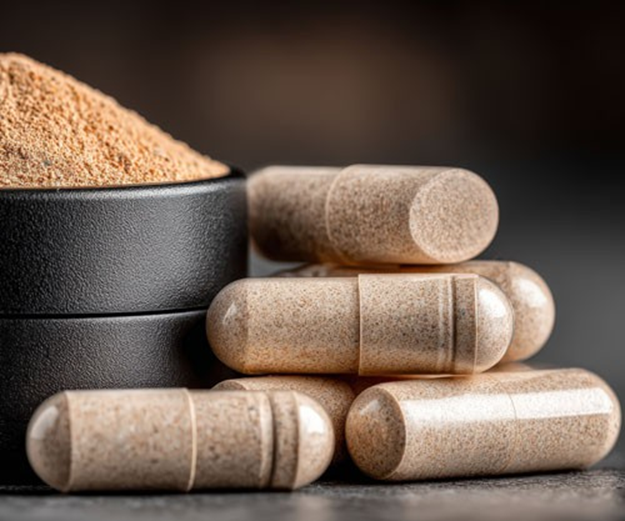 excipients for cost-effective and scalable production.Modern capsules align with clean-label demands, featuring allergen-free, vegan-certified shells and natural colourants derived from plants, seeds and minerals.
Popular pigments include beetroot, spirulina, safflower and vegetable carbon with calcium carbonate (replacing TiO₂). These ecofriendly non-synthetic colours enhance brand identity and consumer confidence in purity.
They can also accommodate fillings such as neutral oils while adhering to rigorous clean-label regulatory standards. Innovative liquid-fill capsules now combine powders, pellets or minitablets in a single sealed unit, thereby protecting sensitive nutraceutical actives.
The outstanding machinability of HPMC and pullulan capsules also supports large-scale commercial manufacturing and subsequent cost-effective product delivery.
Overcoming clean-label challenges: practical strategies and innovation to build trust
Transitioning to clean-label manufacturing involves navigating scientific, operational and regulatory hurdles.
Brands must ensure complex traceability and transparency throughout global supply chains and eliminate synthetic stabilisers that challenge efficacy and shelf-life, requiring advanced encapsulation technologies.
Cost pressures can also arise as natural, certified excipients and reformulation demand higher R&D investment, particularly for smaller companies.
Maintaining aesthetic appeal without synthetic dyes means relying on plant-based pigments such as turmeric or spirulina, which vary in hue and stability.
Regulatory disparity adds another layer of complexity — with differing standards applied by the FDA, EFSA and FSSAI — and voluntary certifications.
Finally, manufacturing scalability is difficult as natural ingredients are often moisturesensitive, which can impact machinability. Brands can overcome these hurdles with strategic actions, such as the following:
- Conducting ingredient audits to eliminate synthetic additives and source verified natural alternatives
- Investing in technology solutions such as QR-enabled or blockchain-backed systems for transparency
- Reformulating with natural ingredients under real-world conditions to maintain machinability and efficacy
- Leveraging partnerships with capsule innovators that offer TiO₂-free, carrageenan-free
and vegan-certified solutions to simplify compliance - Educating consumers using authentic and transparent communication to build trust.
Case example
A European nutraceutical brand highlighted these challenges and solutions by reformulating its herbal and omega-3 product line with TiO₂-free HPMC capsules that were tinted naturally with beetroot and turmeric.
It achieved compliance with EU restrictions, extended their shelf-life by 18% and delivered preservative-free, 100% plant-based supplements — proving that innovation can overcome clean-label hurdles while building consumer trust.
Capsules: more than a vessel, a revolution
The future of clean-label nutraceuticals lies at the intersection of technology, personalisation and sustainability.
Tailored, AI-driven nutrition, blockchain-enabled transparency and smart packaging are all playing a role in its growth and adoption.
They’re redefining consumer expectations and industry innovation by enabling the real-time verification of sourcing and testing.
Brands are setting benchmarks and putting capsules at the forefront of this evolution.
Demonstrating clean-label, natural colourants, carrageenan-free formulas and multidimensional fills transforms capsules from a simple delivery system into a symbol of purity, safety and scientific integrity aligned with the clean-label movement.
By offering TiO₂-free, vegan, allergen-free, preservative-free and fully traceable capsule systems, brands can safeguard ingredient potency while still meeting global clean-label expectations.
This journey from ingredient purity to format versatility is not just about keeping up with regulations or riding trends; it’s about earning and sustaining the confidence of an ever-more informed and wellness-focused global population.
The evolution of clean label from niche to new norm represents more than reformulation; it is a revolution of trust, wherein every capsule serves not just as a supplement but as a fulfilled promise of transparency, responsibility and wellness for an informed global population.